Announcing invited speakers at VSS 2026

VSS 2026 begins tomorrow! We are pleased to announce invited speakers at this year’s workshop.

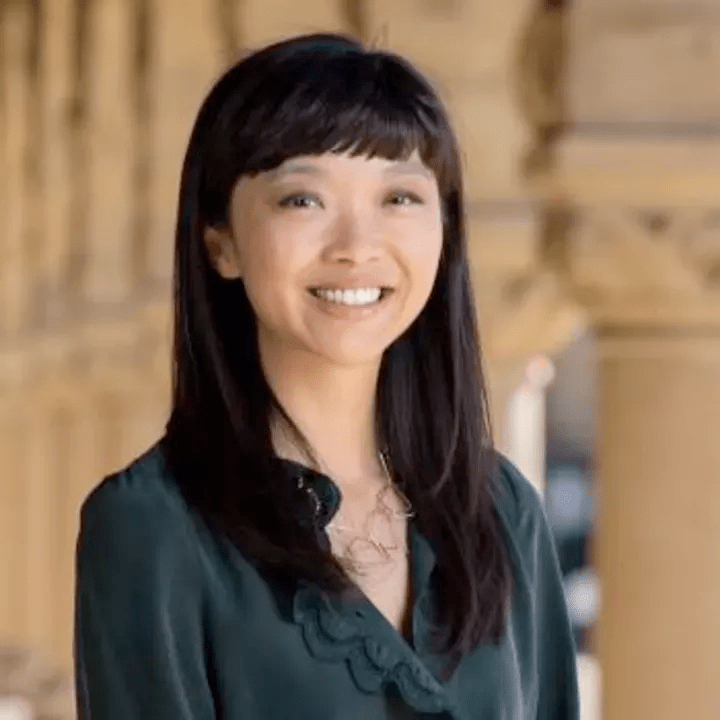
Dr. Judy Fan is an Assistant Professor of Psychology at Stanford University. Her CogTools Lab aims to reverse engineer the human cognitive toolkit—in particular, how people use physical representations of thought to learn, communicate, and solve problems. They use a combination of approaches from cognitive science, computational neuroscience, and artificial intelligence to achieve deeper understanding of quintessentially human ways of thinking and imagining. Dr. Fan’s work spans a huge variety of topics, often bridging cognitive science, vision science, and visualization research.

Michael A. Cohen is an Assistant Professor in the Department of Psychology and Program in Neuroscience at Amherst College. His research focuses on understanding the limits of perception, memory, and cognition using fMRI, EEG, psychophysics, and computational modeling. He asks questions like, “what is the capacity of visual cognition?” and “what is the bandwidth of perceptual experience?”

Invited speaker at VSS 2024: Dr. Keisuke Fukuda

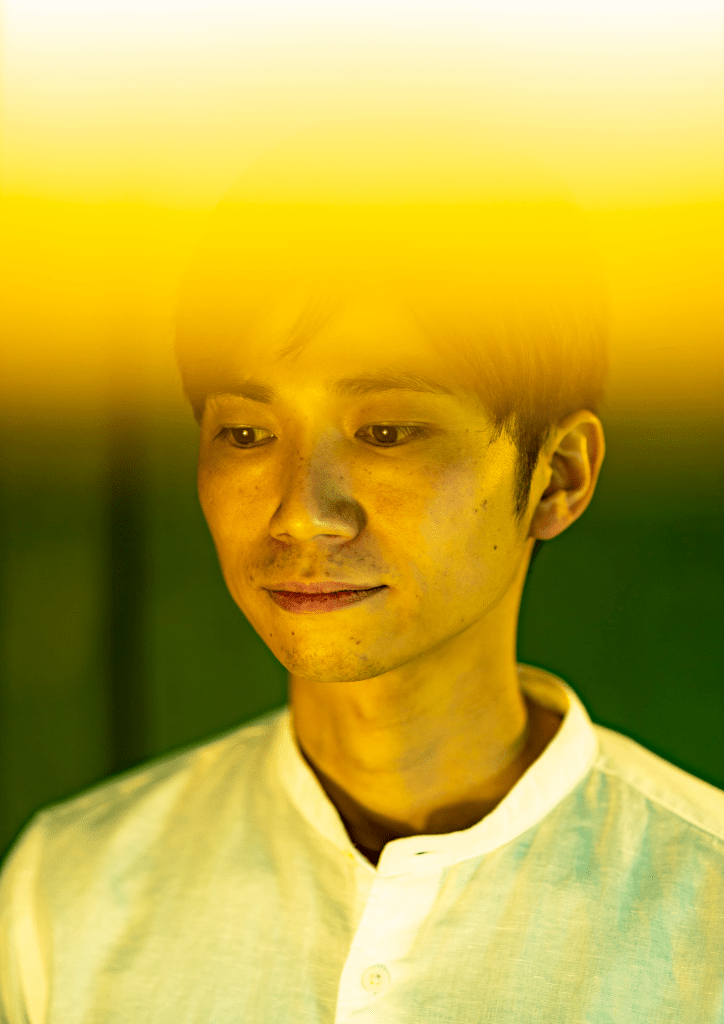
We’re excited to announce our second invited speaker, Dr. Keisuke Fukuda!

Dr. Fukuda’s research focuses on human’s ability to select goal-related information from a plethora of irrelevant information (selective attention), represent and manipulate the selected information (working memory), and store and retrieve the information later in time (long-term memory). While humans are quite good at processing information in a goal-oriented manner, their ability (particularly his own!) is far from perfect. Dr. Fukuda’s research seeks to uncover the mechanisms of such imperfection by combining experimental psychophysics with electrophysiological recordings (e.g., scalp EEG, ERP), computational modeling, and individual differences approach. Dr. Fukuda is also interested in assisting and improving human information processing by translating the findings and techniques in cognitive psychology and neuroscience.

Invited speaker at VSS 2024: Dr. Jessica Witt

We’re excited to announce VisXVision’s first invited speaker at VSS 2024! Dr. Jessica Witt is the PI of the Witt Data Visualization Lab and is a Professor in Psychology at Colorado State University (CSU). Dr. Witt earned her PhD from the University of Virginia in 2007, and has been at CSU since 2012. She won the American Psychological Association’s (APAs’) Distinguished Scientific Award for Early Career Contribution to Psychology (2017), the Janet Taylor Spence Award for transformative early career contributions from APS (2015) and the Steve Yantis Early Career Award from the Psychonomic Society (2014). Her new line of research focuses on basic graph design and understanding uncertainty. The work on uncertainty is currently being applied to medical decisions and health disparities, as well as climate and weather predictions.

Invited Speaker IEEE VIS 2023: Dr. Barton Anderson

We’re excited to announce another invited speaker: Dr. Barton Anderson! Read more about him below.

Dr. Barton Anderson is a Professor of Psychology at the University of Sydney. His research is focused on mid-level vision, including perceptual organization, segmentation, grouping, and the recovery of surface attributes (e.g., color or shape). Much of his recent work involves understanding the perception of three-dimensional shapes and their properties.
Dr. Anderson received his PhD from the University of Vanderbilt, followed by two postdoctoral positions at Harvard University and Rutgers University. Prior to his appointment at the University of Sydney, he held Associate Professorships at the University of New South Wales and at the Massachusetts Institute of Technology. Dr. Anderson has held an ARC Professorial fellowship and has received a Discovery Outstanding Researcher Award.

Invited Speaker IEEE VIS 2023: Dr. Kim Curby

We’re excited to announce another invited speaker: Dr. Kim Curby! Read more about her below.

Kim Curby is an Associate Professor in the School of Psychological Sciences at Macquarie University in Sydney, Australia. She completed her PhD in Psychology at Vanderbilt University and a post-doctoral research fellowship at Yale University. She currently serves as the Deputy Director of the Macquarie University Performance & Expertise Research Centre. Her research focuses on understanding the mechanistic basis of visually based expertise. More broadly, her research aims to investigate the extent to which effects of visual learning and/or perceptual expertise permeate even the most basic cognitive functions. Her research also aims to elucidate the cognitive and neural mechanisms of successful learning in the visual domain. Her research is supported by the Australian Research Council (ARC).

Invited Speaker IEEE VIS 2023: Dr. Steve Most

We’re excited to announce one of our invited speakers: Dr. Steve Most! Read more about him below.

Steve Most is Associate Professor of Psychology at the University of New South Wales in Sydney, where he directs the Motivated Attention and Perception Lab. He and his team use behavioural and physiological measures to understand how attention, motivation, and emotion shape perception and memory, as well as their implications for wellbeing in the real world (e.g., road safety). He is best known for his work on inattentional blindness and on emotion-induced blindness. Steve received his B.A at Brandeis University and his Ph.D. in psychology from Harvard, followed by postdoctoral training at Vanderbilt and Yale. Before joining UNSW, he was tenured as Associate Professor at the University of Delaware in the US, where he continues to maintain an affiliated appointment. In 2021, Steve co-authored (with Marvin Chun) a new textbook on Cognition, available from Oxford University Press, which received the Most Promising New Textbook Award from the Textbook and Academic Authors Association.

We’re back! See you at IEEE VIS 2023!

We’re returning for our third biennial installment of visXvision at IEEE VIS.


Our workshop will cover the latest at the intersection of vision science and visualization research, providing the opportunity for researchers in both communities to update their understanding of this cross-disciplinary research and discover avenues for new collaborations.

Stay tuned to our page on VIS 2023 for more details!